

Gone with the Wind: The Cautionary Tale of Kinangop Wind Park

Carbon markets have often been presented as either a silver bullet or a scapegoat in the fight against climate change. However, Kinangop Wind Park's (KWP) failure in Kenya tells a different story—one where neither carbon markets nor climate finance mechanisms were the real problem. Instead, systemic governance failures, poor stakeholder engagement, and flawed financial models sealed the fate of what could have been a landmark renewable energy project.
Kenya has long been a leader in renewable energy, with over 90% of its electricity coming from sources like geothermal and hydro. As part of its Vision 2030 strategy, the government sought to diversify its energy mix by aggressively attracting private investment in wind power. Kinangop Wind Park was among the early beneficiaries of this policy push. The project, located in Nyandarua County, was expected to generate 60.8 MW of electricity, enough to power 150,000 homes. With wind speeds averaging 9.5 m/s, the location was ideal, and investors quickly lined up to back the initiative.
Financially, KWP was well-positioned. It secured $153 million in funding, with 58% coming from commercial debt and 42% from private equity. Key investors included Norfund, the African Infrastructure Investment Fund 2 (AIIF2), and Standard Bank of South Africa. On paper, everything seemed in place for success. However, beneath the surface, the project was already standing on shaky ground.
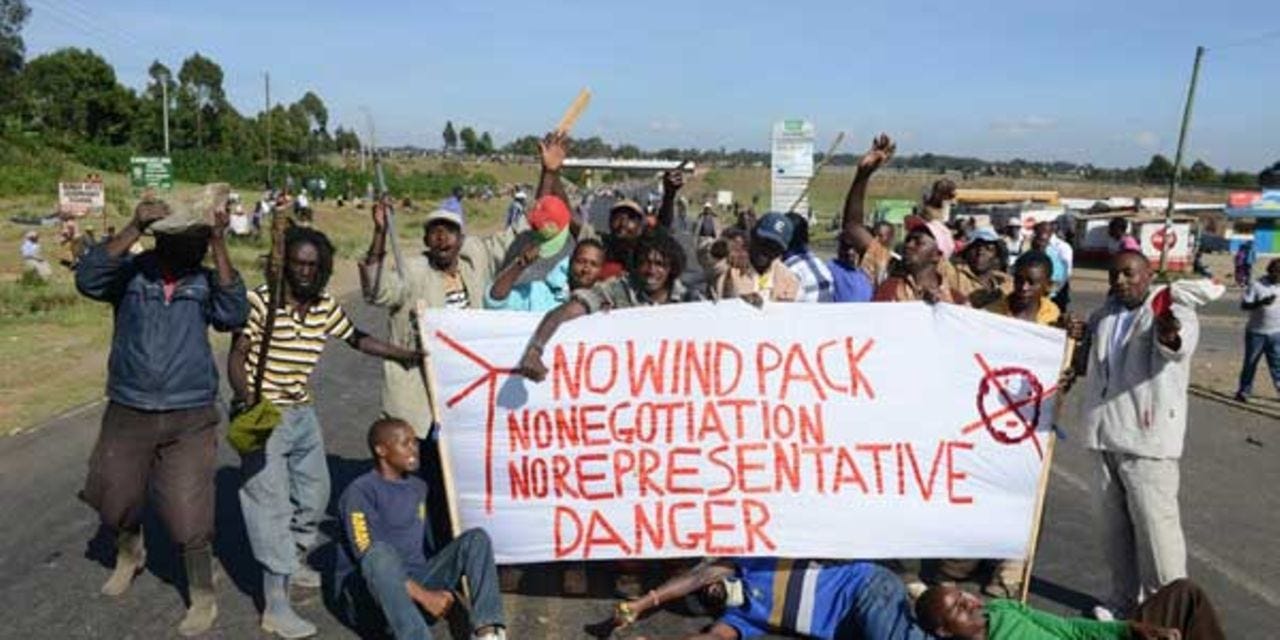
From the outset, KWP faced stiff opposition from the local community. Smallholder farmers, who had lived on the land for generations, argued that they had not been adequately consulted before the project was greenlit. Many feared displacement, while others worried about potential health effects from the wind turbines. But the most significant grievance was economic—locals saw little to no direct benefits from the venture, despite their land being at the center of it. As resistance grew, protests turned violent, and legal battles ensued, bringing construction to a halt.
The delays proved disastrous. KWP’s financial model was heavily debt-driven, meaning any disruptions risked breaching financial covenants. By 2015, Standard Bank and other lenders grew wary of the mounting risks and began withdrawing their support. With legal costs spiralling and no resolution in sight, the project was officially abandoned in early 2016. The fallout was severe: Norfund wrote off $10 million in losses, investors faced over $40 million in legal and termination costs, and the project was placed under receivership. Even an investor lawsuit against the Kenyan government was dismissed by the International Court of Arbitration in 2018, further dampening investor confidence.
The collapse of Kinangop Wind Park left behind more than financial losses—it left a warning. Investors became increasingly hesitant to fund wind energy projects in Kenya, slowing the country’s progress in this sector. Meanwhile, the very communities that had resisted the project ended up with nothing—no compensation, no development benefits, and no say in what happened next.
At its core, the failure of KWP was not about carbon markets or even climate finance; it was about governance. Had the project been structured with stronger community engagement, clearer land policies, and a more resilient financial model, it might have succeeded. Future renewable energy projects must learn from this misstep. Governments and investors alike need to prioritize early and meaningful stakeholder involvement, implement flexible financial structures, and ensure that local communities see tangible benefits.
Because when climate finance fails, it’s not just investors who lose—it’s entire communities, and sometimes, an entire country’s credibility on the global stage.
The lesson from Kinangop Wind Park is clear:
clean energy projects must be built on strong governance, transparent policies, and community inclusivity.
As Africa continues to attract climate investments, how do we ensure that large-scale renewable projects succeed where others have failed? Share your thoughts in the comments. Let's drive the conversation forward.
At Finding Carbon, we believe climate solutions must deliver real, lasting impact. Our mission is not just to talk about sustainability but to track, drive, and implement quality projects in the region. Carbon finance should strengthen local value chains and genuinely benefit communities—not just line corporate pockets.